David Wexler. Cinema of the Void. Rewritten 11/8/26 from the 2017 essay.
"DMT only lasts for six minutes. But it really seems like an eternity. It releases the same chemical your brain receives when you die."
Alex says this to his friend Oscar early in Enter the Void. A few minutes later, Oscar is dead on the floor of a nightclub toilet. And the film is just getting started.
I. A camera that cannot die
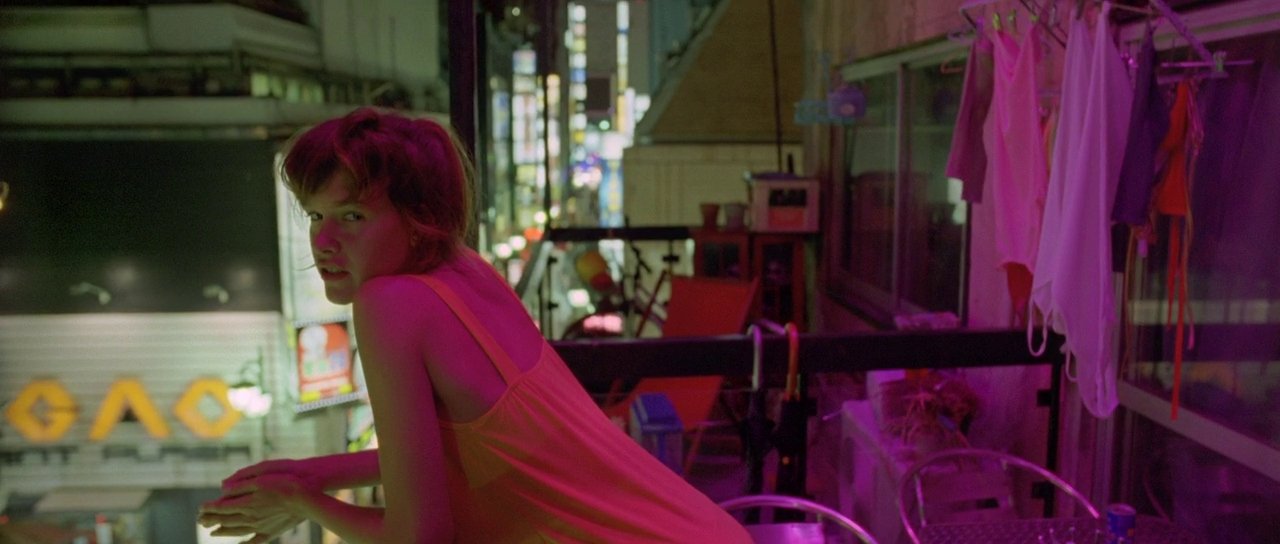
Look at how the film begins. Before a single image, the credits arrive like a seizure. Every name in a different typeface, strobing to LFO's Freak. Gaspar Noé is telling you, before the story starts, that your nervous system is the subject.
Then we are inside Oscar's head. Literally. The camera is his eyes. When he blinks, the screen goes black for a fraction of a second. We see his hands, his sister Linda, the neon of Tokyo through his window. We never see his face, except in a mirror.
This has been tried before. In 1947, Robert Montgomery made Lady in the Lake, a detective film shot entirely from the eyes of Philip Marlowe. People found it strange and a little silly. The camera lumbers like a man in a heavy suit.
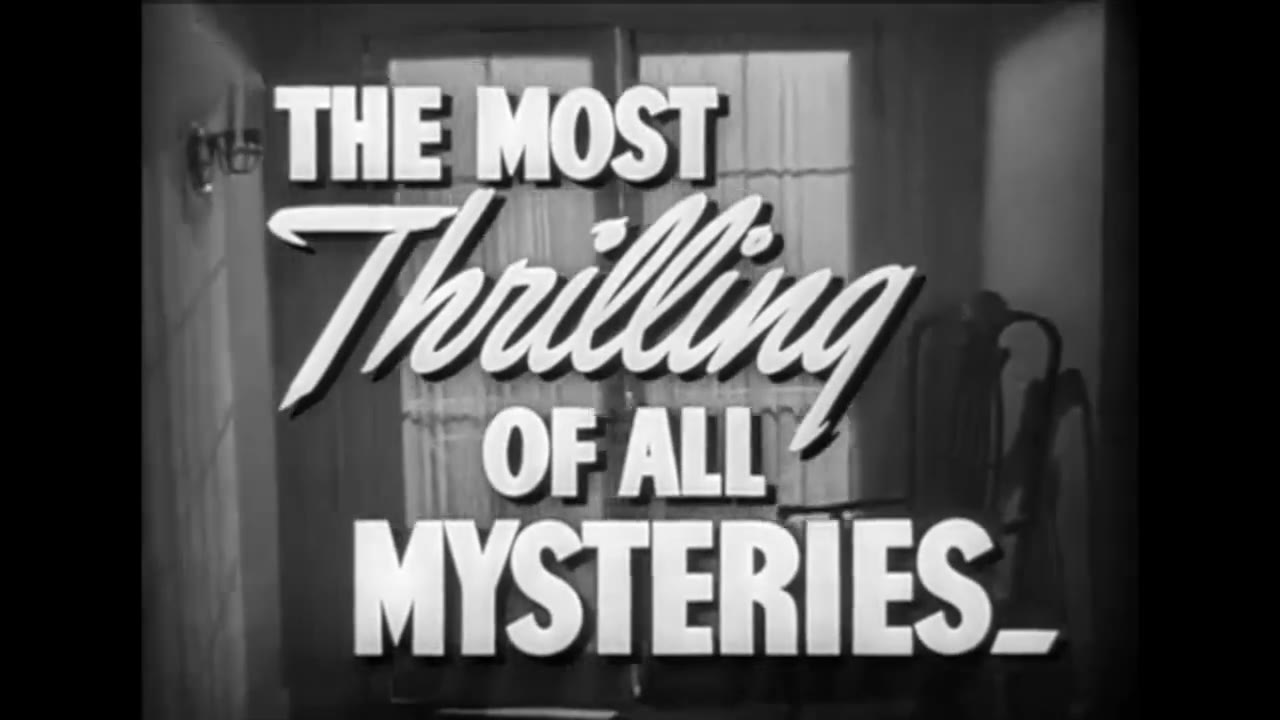
Noé has said he watched it on mushrooms in his twenties, and thought: this is how you could film a trip.
But Enter the Void goes somewhere Lady in the Lake never could. When the police shoot Oscar, the camera stays with him. Then it rises out of his body, up through the ceiling, and floats above Tokyo for the next two hours. The point of view outlives the person.
Cinema has a word for a camera that floats free of any character. We call it omniscient. Noé gives that floating camera a soul. Bodiless, grieving, curious, and unable to look away.
II. Every era gets the trip it deserves
Film history is full of attempts to show what a mind sees when it dissolves. Each one tells you about the culture that made it.
In the late fifties, in a San Francisco planetarium, Jordan Belson projected light onto a dome for the Vortex concerts. Mandalas, pulses, abstract color. The trip as cosmic geometry, and as meditation.
In 1967, Roger Corman made The Trip, written by Jack Nicholson, with Peter Fonda dropping acid in Los Angeles. Hollywood turned the experience into a light show. Body paint, strobes, a beach. The counterculture as fashion.
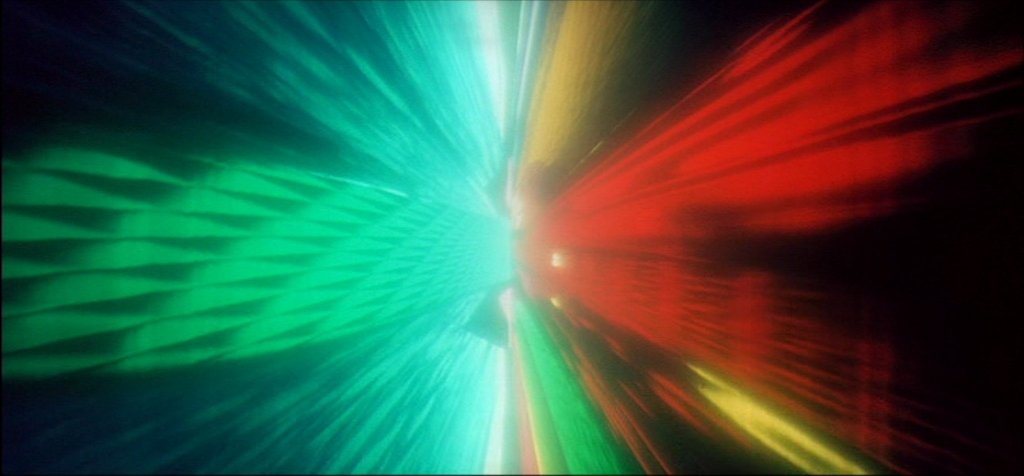
A year later came the Star Gate in 2001: A Space Odyssey. Douglas Trumbull's slit-scan corridors of light, and Keir Dullea's face frozen in terror. Noé has said 2001 is the film that made him want to direct. The trip there is the space race turned inward. Humanity hurled through a door built by a higher intelligence.
In 1980, Ken Russell's Altered States, written by Paddy Chayefsky, the man who wrote Network, put the trip in a laboratory. An isolation tank, a scientist, mushrooms from Mexico. The trip as experiment, and as body horror.
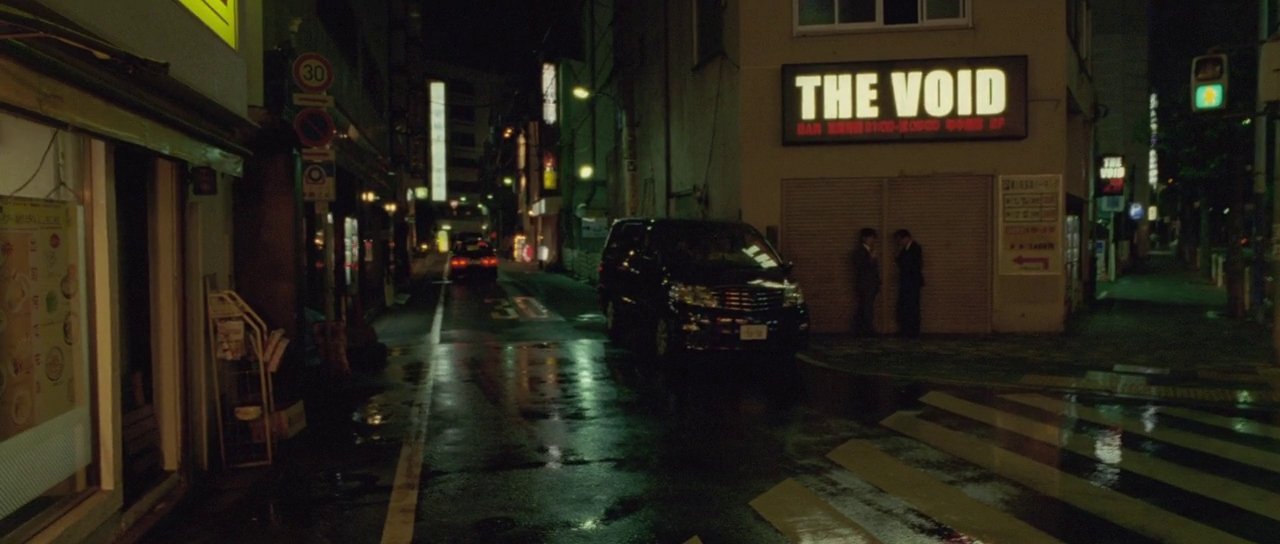
Then Enter the Void, in 2009. Where does Noé put the trip? In a Tokyo apartment, in a nightclub called The Void, through the eyes of a small-time dealer living off his sister's stripping. Its visions are spectacular. Fractal tunnels, tentacled light, organisms of color devouring each other. And no one in the film knows what they mean.
III. The DMT narrative
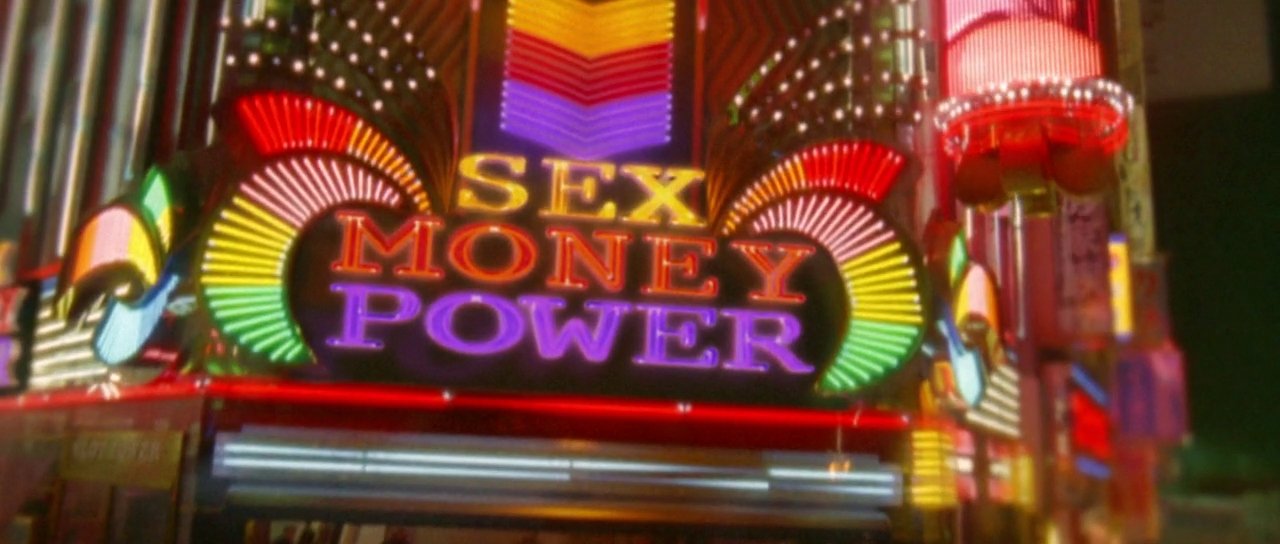
That's the story our culture began telling itself in the 2000s. Call it the DMT narrative.
It's a spiritual story with no Christ and no Buddha at its end. Its center is a Lovecraftian spectacle of tentacled beings consuming consciousness, with little regard for human tradition or endeavor.
The spiritual narratives of indigenous cultures grew around their sacraments. Ayahuasca. Peyote. The mushroom. The DMT narrative grows from the sensational nihilism of late capitalism. Watch Oscar after his trip. Walking with Alex, he asks, "Do you think Bruno has anything stronger than DMT?"
He is shopping. He wants the next product. And what he's really looking for is a transformation only death could give him.
IV. The Book of the Dead, in fragments
Alex lends Oscar a copy of the Tibetan Book of the Dead, and walks him through it. When you die, your spirit leaves your body. You see lights. You relive your life. Then you wander, until you're drawn toward a womb, and reborn.
The film follows that map. Oscar dies. He watches his life again, from the back of his own head. The crash that killed his parents. The promise to Linda that he would never leave her. Then he drifts through Tokyo, through walls and through bodies, toward rebirth.
Noé has always made films about the body losing its grip. I Stand Alone, a butcher's monologue of rage. Irréversible, told backwards, from horror to tenderness. Later, Climax, a dance troupe dissolving on spiked sangria in unbroken takes. Enter the Void is the one where the body is gone from the start, and the camera has to carry everything.
He was born in Buenos Aires, the son of the painter Luis Felipe Noé. He was twelve when his family fled Argentina's dictatorship for France. He had wanted to make this film for most of his adult life. And what he finally made is a postmodern explosion of fragments. A sacred text, filtered through strip clubs, drug deals and neon.
It's a world where God has long been dead, replaced by the vacuum of capital.
V. Orphans
In older cultures there were maps for these experiences. Gods, ancestors, deities, to give the wandering spirit a context.
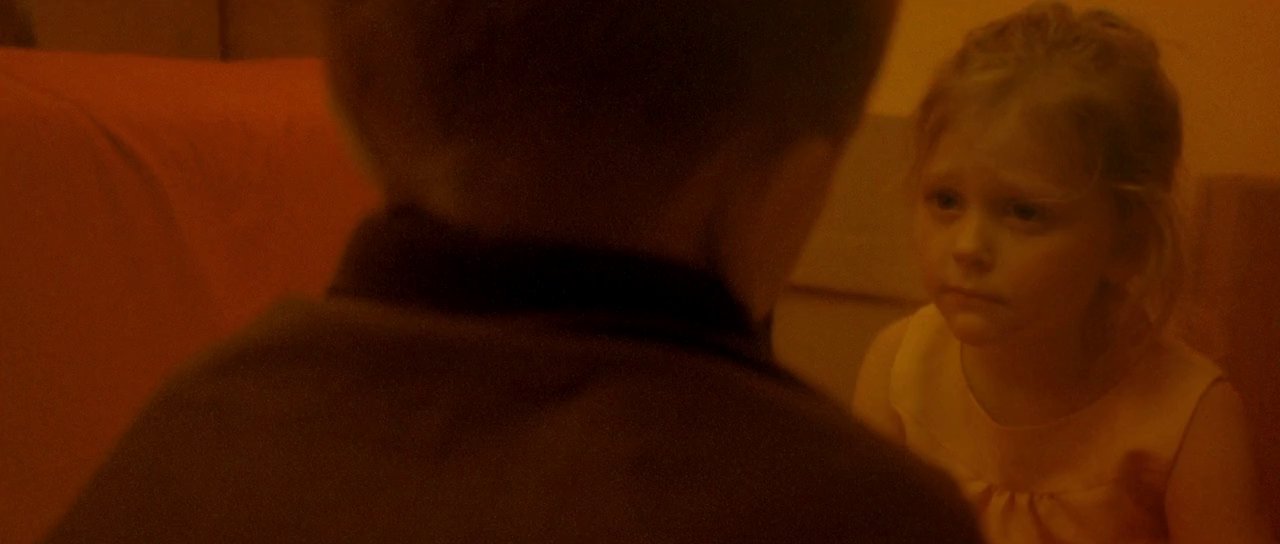
Oscar has none. We meet him smoking alone, with no shaman, no guide, and no clear reason at all.
What he has is a wound. Look at the crash. Noé shows it again and again, from inside the car and from above it. Two children in the back seat, and then the windshield. After that, Oscar drifts through life like a ghost already.
Their death is more than tragedy. It's a metaphor for the moment all of us in the modern technocracies were orphaned by traditional authority, and handed over to the market. Capitalism wants to be mother and father to every being on the planet.
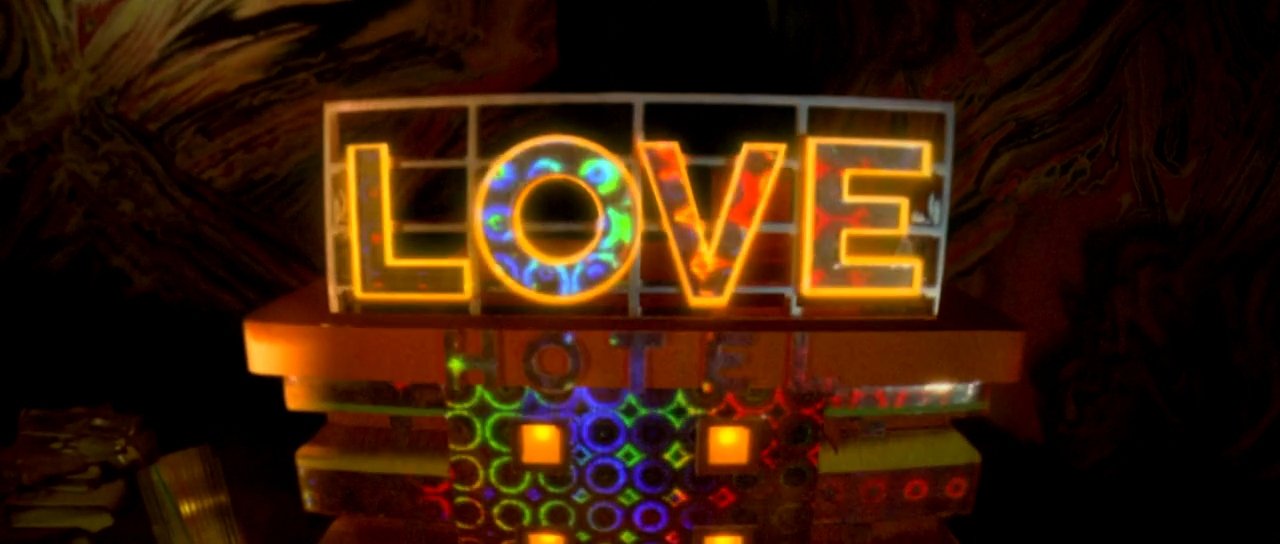
So it makes sense that the film's last great sequence happens in a love hotel. A building where you pay by the hour. The camera drifts from room to room, couple to couple, and from every body rises a glowing light. The most commercial room in Tokyo is where the film finds something like the sacred.
Coda
So the spiritual arrives at the fringe. In addiction, in strobing, hyper real realms, fractal and alive.
As capital feeds us an endless barrage of numbing spectacle, it has become psychedelic itself. And people trapped inside it reach for ever more radical sensation. A clandestine gateway to revelation. A chaotic collision of ancient wisdom and dystopian escape.
The film ends with a birth. Is it Oscar, reincarnated as his sister's child? Noé has suggested it may be Oscar's memory of his own birth, the last dream of a dying brain. The film leaves both doors open.
And yet, at the end of the descent, the spiritual realm is still waiting. That's the message of Enter the Void.