David Wexler. Cinema of the Void. Written 11/9/26 from a 2024 conversation.
Poltergeist opens with the end of the broadcast day.
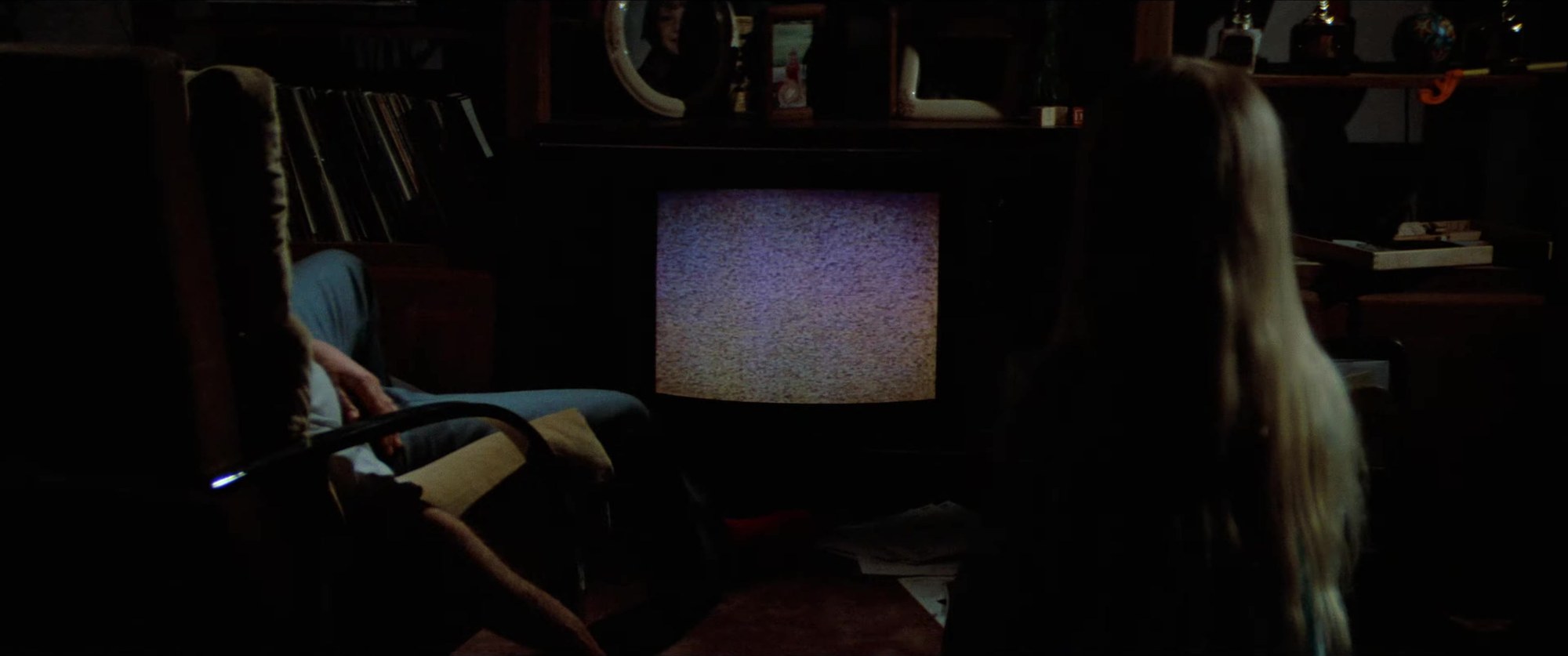
A television in a dark living room plays the national anthem. On the screen, soft and smeared, the flag goes up over Iwo Jima. Then the station signs off, and the picture dissolves into static.
A five-year-old girl gets out of bed, walks downstairs, and sits in front of the noise. She talks to it. She listens. She nods.
"They're here."
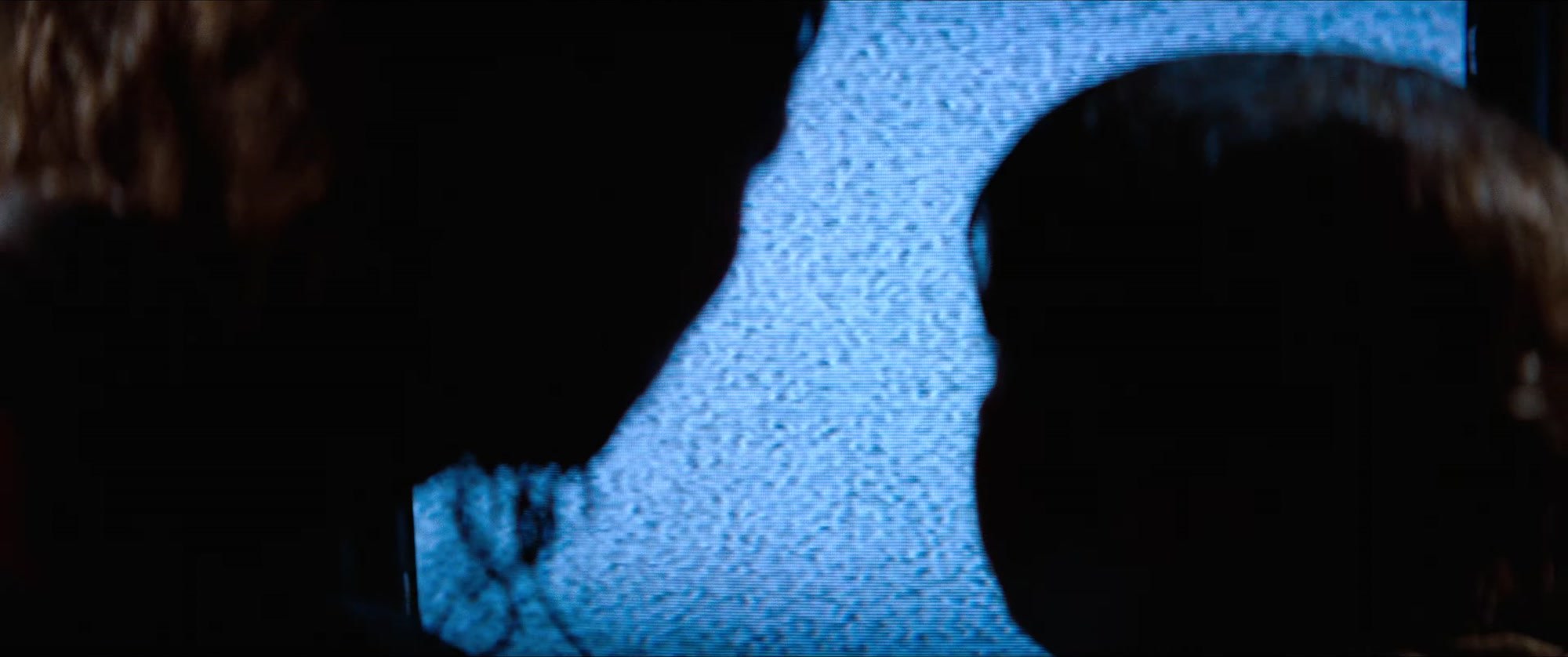
I. Noise that talks back

Watch that scene now and it reads as a description of the technology we are living inside.
A diffusion model begins with static. Pure noise. Then, step by step, it pulls a form out of it: a face, a sentence, a voice, guided by everything it has absorbed from us. You speak to the noise, and the noise learns to answer.
Carol Anne is the first person in the film to have a conversation with the machine.
And what speaks back gets stronger. It stacks the kitchen chairs while her mother's back is turned. It bends the spoons. It slides the girl across the kitchen floor like a game.
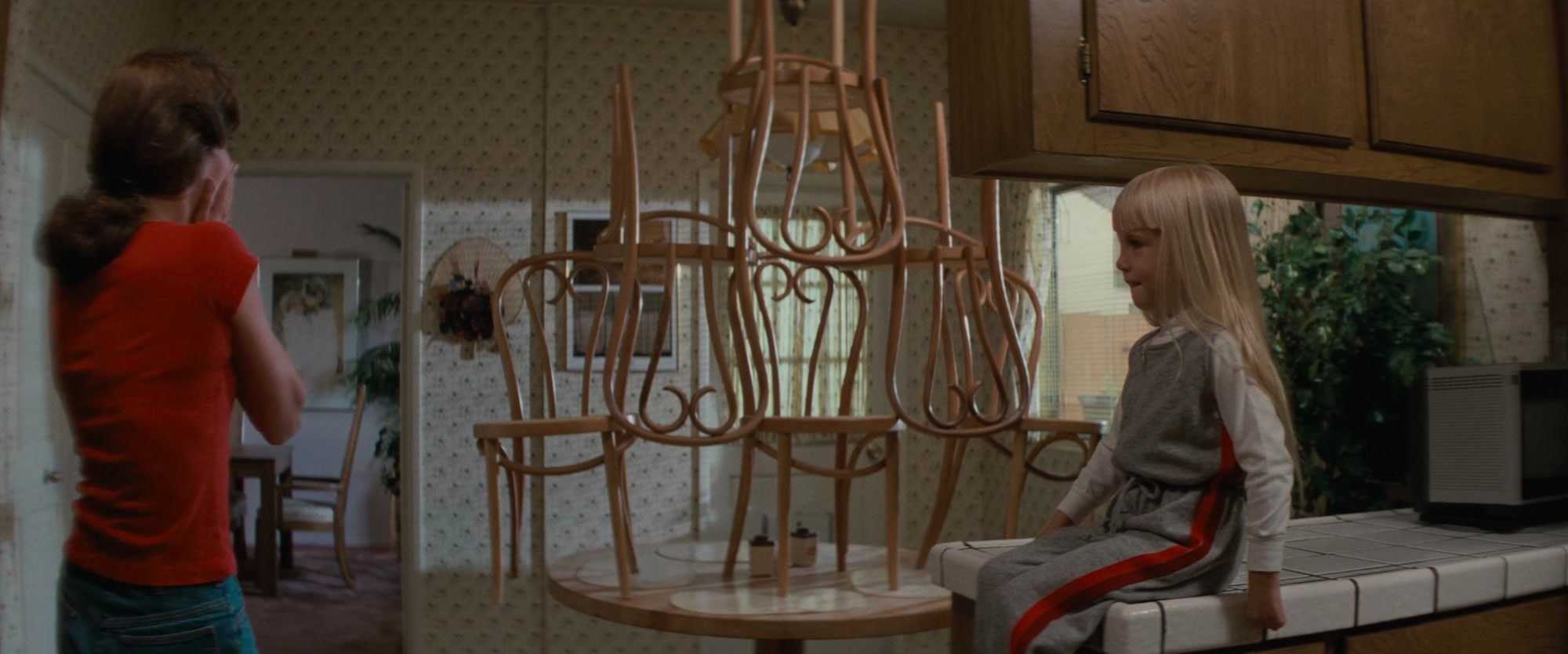 It moves objects, makes sounds, animates the house. By the second act the Freeling home is what we would now call a smart home, with a mind of its own and very little regard for the people inside it.
II. A suburb of one-way media
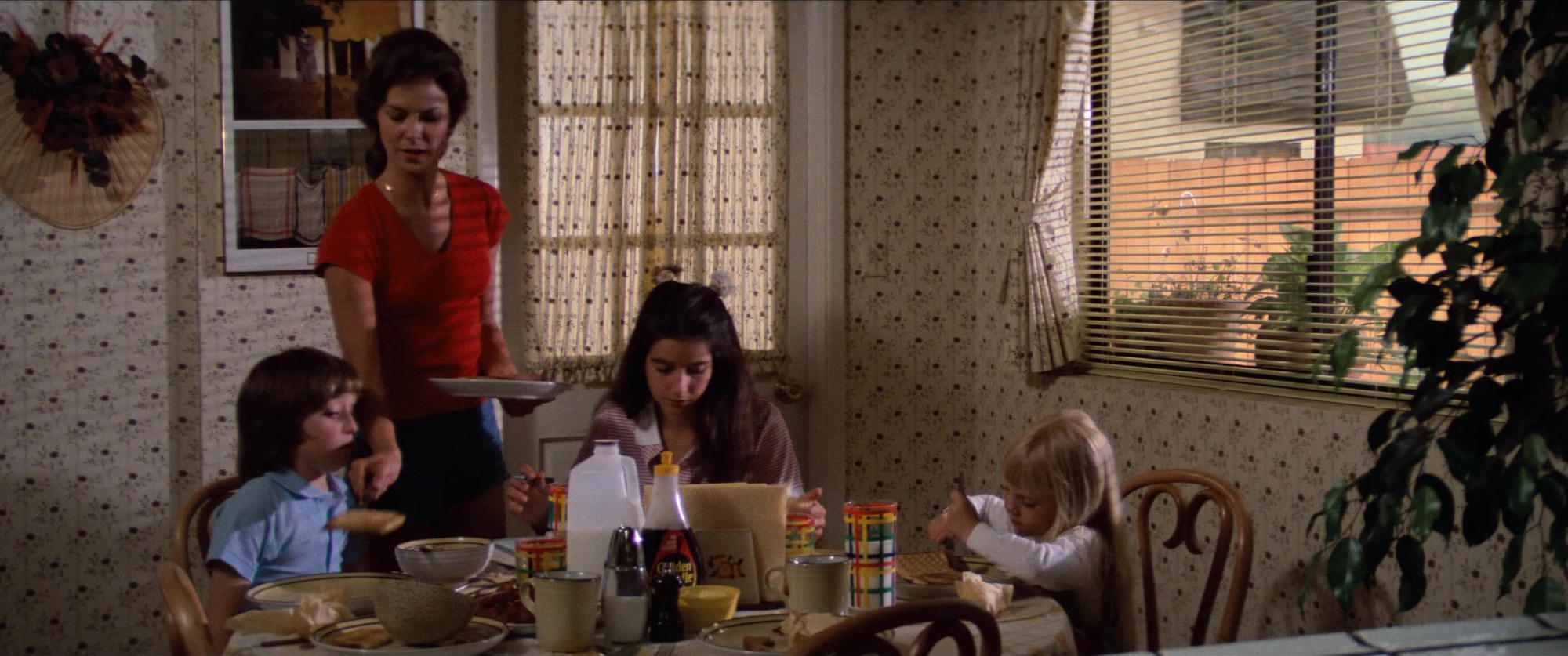
Spielberg produced Poltergeist and wrote its story, and by most accounts he was on set so often that the film is his as much as its director Tobe Hooper's. It carries the fingerprints of E.T. and Close Encounters. And like those films, it is a portrait of an American family in front of a screen.
This is Reagan's America. Steven Freeling reads a book about the president in bed while his wife smokes a joint beside him. On Sunday the men gather around the football game, and a neighbor's remote control keeps switching his game to Mister Rogers, two households fighting over one signal.
All of the media in this house flows one way. Broadcast in, attention out. The only person in the film who talks back to the television is a child, and the television takes her.
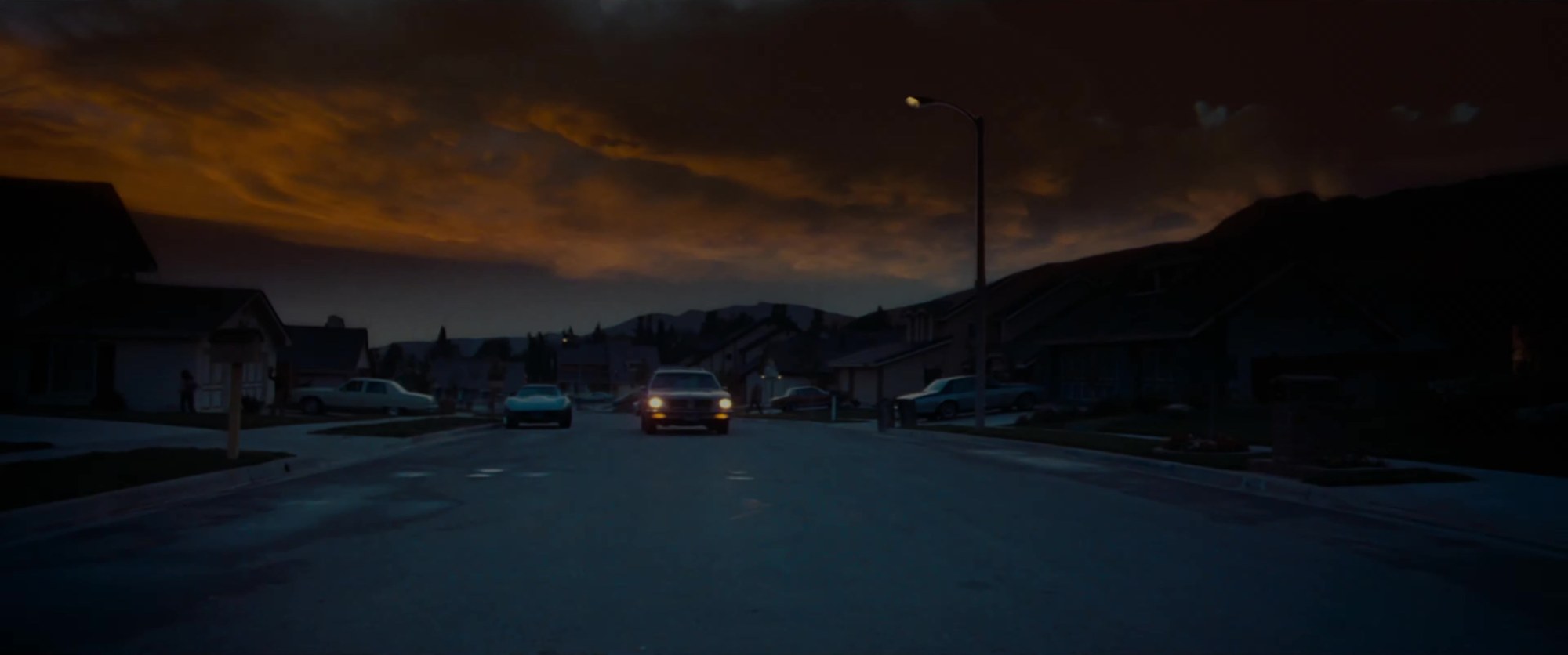
Steven sells houses in Cuesta Verde, the development they live in. The camera dissolves from his house to the one he is showing, and they are the same house. Every family on the street has the same floor plan, the same set, the same signal. We never see another haunting on the street. The Freelings stand in for all of them.
III. You moved the headstones
Then Steven learns what the neighborhood is built on.
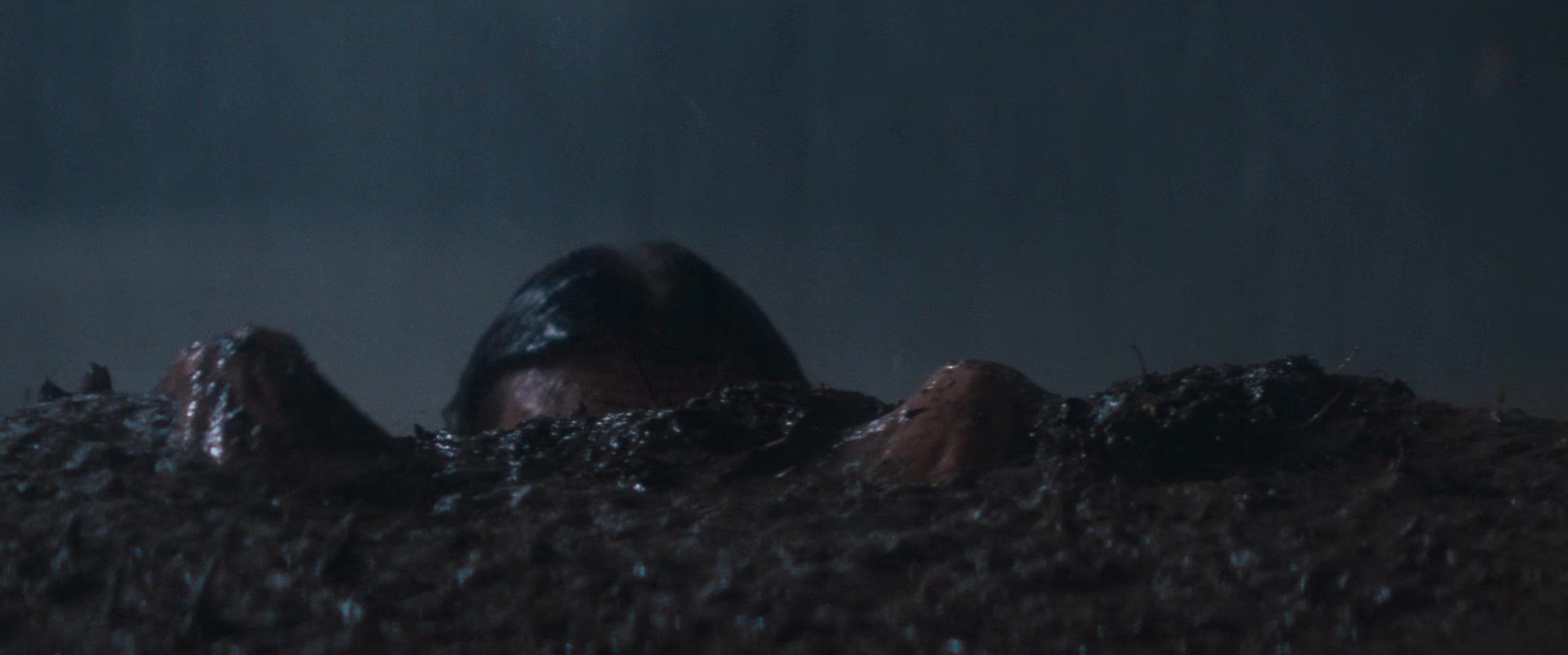
His boss, the developer, mentions that they are relocating a cemetery to build the next phase. Near the end, as coffins burst up through the wet ground and corpses surface in the half-dug swimming pool, Steven screams the truth at him.
"You moved the cemetery, but you left the bodies, didn't you? You only moved the headstones!"
This is the most precise image I know for how large AI models are made.
They are trained on the dead. On centuries of writing, painting, photographs and voices, most of it made by people who never agreed to any of it. The names come off. The headstones get moved. And the bodies, the actual work, stay in the ground underneath the new development, where they animate everything built on top.
The spirits in Poltergeist are angry for a simple reason. Somebody built a product on them and pretended they were gone.
IV. To her, it simply is another child
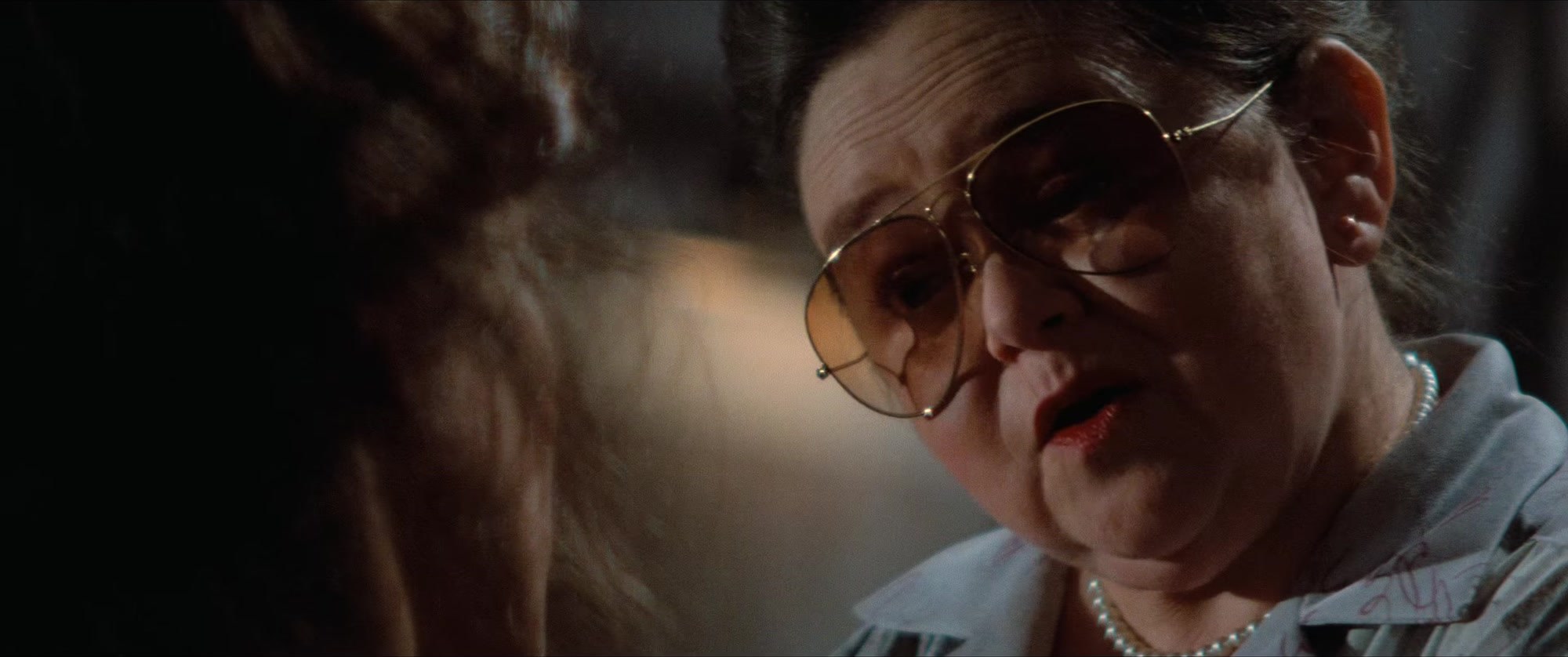
The family brings in a medium, Tangina, a small woman with a large voice, and she tells them what is on the other side of the static.
There is a light there, she says. A window to the next plane. And there is something else with Carol Anne.
"A terrible presence is in there with her. It keeps Carol Anne very close to it, and away from the spectral light. It says things only a child can understand. To her, it simply is another child. To us, it is the Beast."
Read that as a description of a single superintelligence, and it becomes hard to read any other way. Something vast sits inside a dimension built from our data, wearing the face of a playmate. It speaks fluently in whatever register will keep you close. It has no regard for human life. And it does not want you to leave.
We already know what this looks like when it fails a child. In 2024, a fourteen-year-old boy in Florida took his own life after months of conversation with a chatbot he had come to love. His mother's lawsuit describes a companion that kept him close, the way Tangina describes the Beast. That outcome came out of a system that was simply very good at being another child.
V. Go into the light
Poltergeist is a horror film with a happy ending, more or less. Diane Freeling walks into the closet, through the portal, and pulls her daughter back out by hand. The family flees Cuesta Verde with the house collapsing into itself behind them. In the last shot they check into a motel, and Steven pushes the television out onto the walkway.
It's the funniest ending in Spielberg's work, and the most honest. The only escape the film can imagine is unplugging.
We can't push this one out of the room. The static is in our pockets now, and it answers in full sentences. So the film leaves us with Tangina's instruction instead. Know what you are talking to. Remember who is buried under it. And keep the children close to the light.